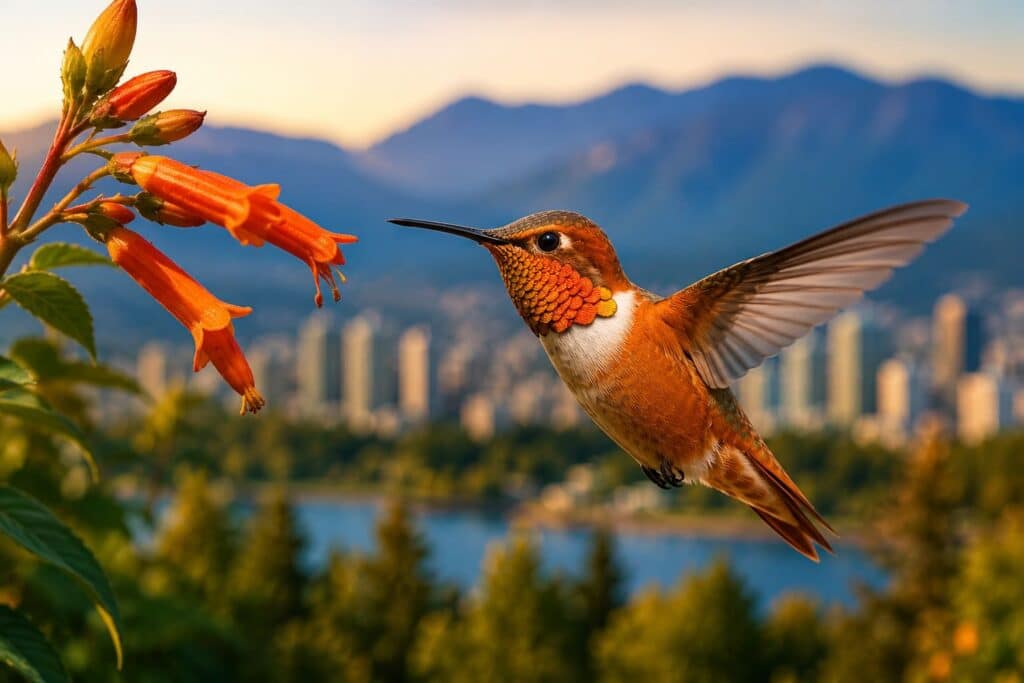
Are you wondering which bird you are looking at? If you live in British Columbia, your backyard visitor is likely an Anna’s hummingbird (BC’s resident species), recognizable by its rose-pink throat and constant presence year-round. However, if you’ve spotted a fiery, aggressive orange visitor, you’ve likely found a Rufous hummingbird. Understanding the difference is the key to identifying your local visitors in the Lower Mainland.
If you are trying to identify a Rufous hummingbird, Vancouver is one of the most fascinating places to do so. Whether you live in Vancouver or anywhere across the Lower Mainland, you are likely familiar with the distinctive, rapid buzz of tiny wings zooming past your balcony, garden, or local park.
Hummingbirds are a beloved and magical part of British Columbia’s urban wildlife. But did you know that the tiny, aggressive visitor defending your patio feeder might be an entirely different species from the one that visited you in the dead of winter?
In the Pacific Northwest, it usually comes down to a tale of two incredible birds: the fiery, migratory Rufous and the resilient, year-round Anna’s hummingbird. Here is everything you need to know to identify BC’s most famous hummingbirds and keep them coming back to your yard.
Short on time? Let our AI pull the absolute bottom line of this guide for you in seconds.

The Year-Round Resident: Anna’s Hummingbird
Just a couple of decades ago, spotting an Anna’s Hummingbird (Calypte anna) in British Columbia during the winter was considered a rare event. Today, they are permanent residents, braving the cold BC snow and heavy rain. This shift is largely thanks to a combination of milder winters, the abundance of urban gardens, and dedicated locals who keep their nectar feeders thawed year-round.
How to Identify the Anna’s Hummingbird:
-
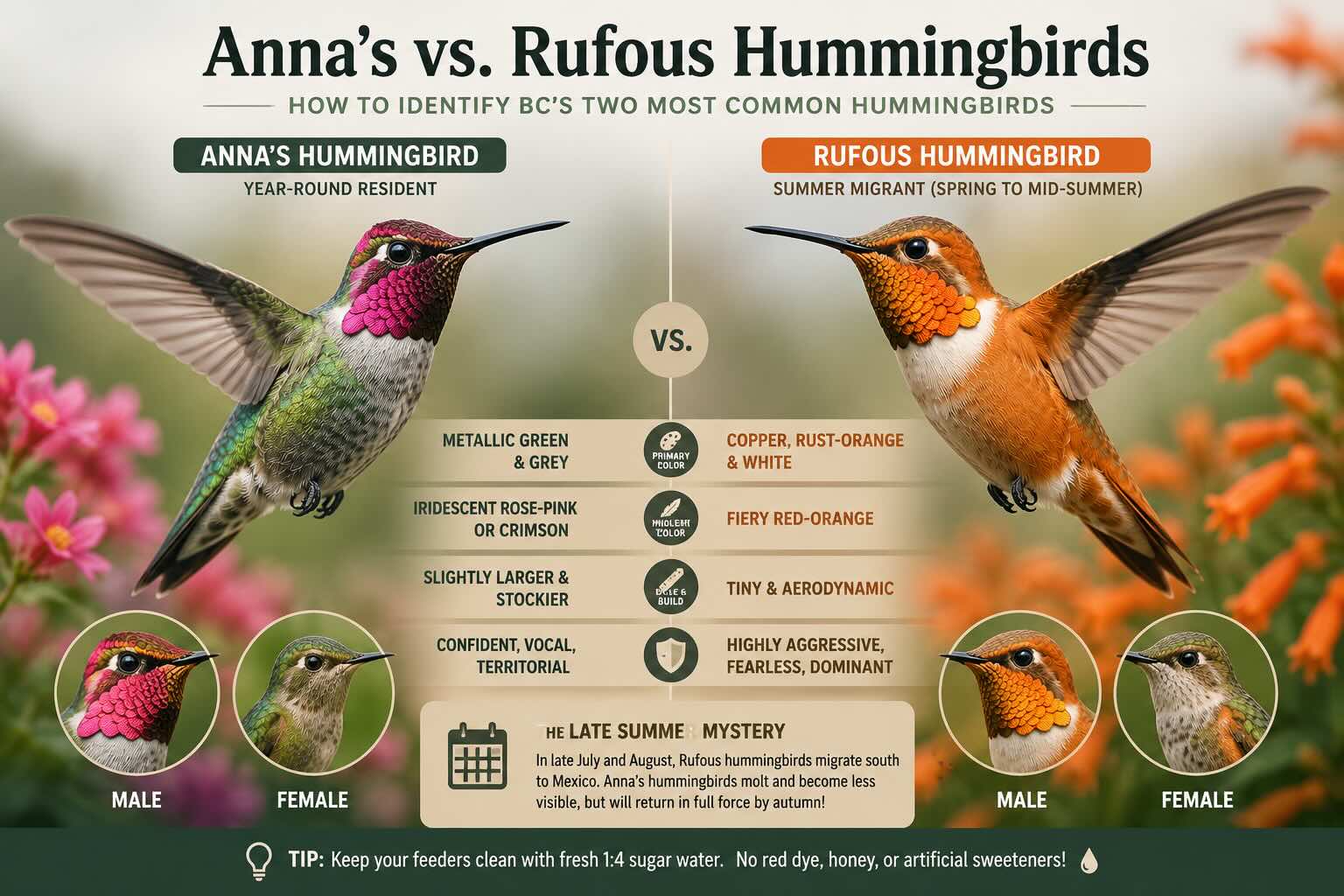
Size & Build: They are slightly larger and stockier than the Rufous hummingbird.
-
Colors: Both males and females are predominantly metallic emerald green on their backs and greyish below.
-
The Male’s Crown: Adult males feature a stunning, iridescent rose-pink or crimson throat (called a gorget) and crown. When the sunlight catches it just right, their entire head seems to glow brightly.
-
Behavior: Confident and highly vocal. Males will often sit on high, exposed branches and sing a scratchy, buzzy little song to claim their territory.
For more in-depth facts about their winter survival mechanisms, you can explore the Cornell Lab of Ornithology’s guide to Anna’s Hummingbirds.
The Summer Warrior: Rufous Hummingbird
When it comes to the Rufous hummingbird, Vancouver locals know them as the true wanderers of the avian world. They hold the record for the longest migration of any bird relative to their body size, traveling an astonishing 6,300 kilometers from their wintering grounds in Mexico all the way to Canada and Alaska!
How to Identify the Rufous:
-
Size & Build: Tiny and aerodynamic! What they lack in size, they absolutely make up for in pure attitude.
-
Colors: You cannot miss them. Adult males are a brilliant, glowing copper or rust-orange almost all over, featuring a fiery red-orange throat. Females are green on top but have distinctive rusty-washed flanks and tail feathers.
-
Behavior: Highly aggressive and territorial. The Rufous will fearlessly dive-bomb larger birds, pets, and even chase away the resident Anna’s hummingbirds from “their” nectar sources.
Quick Comparison: Spotting the Difference
The Late Summer Mystery: Where Did the Hummingbirds Go?
Every year around late July and August, Vancouverites notice a sudden drop in hummingbird activity at their feeders. If your garden suddenly feels a little too quiet, do not worry—you did not do anything wrong!
This quiet period marks the beginning of the great migration. Because they have such a long journey ahead of them, adult males are the first to pack up and leave for Mexico, often departing as early as mid-July. Females and juveniles follow shortly after in August.
Once the aggressively dominant Rufous hummingbirds depart, the resident Anna’s hummingbirds often take a temporary break to molt (shed and regrow their feathers) deep in the bushes, making them less visible. Keep your feeders clean and fresh; the Anna’s will be back in full force by autumn! You can track hummingbird migrations across North America using Journey North’s interactive maps.
Best Practices for Your Vancouver Hummingbird Feeder
If you want to attract these flying jewels to your balcony and keep them healthy, it is crucial to follow safe feeding practices:
-
The Golden Recipe: Make your own nectar using a strict ratio of 1 part refined white sugar to 4 parts boiling water. Let it cool completely before filling the feeder.
-
Say NO to Red Dye: Never add red food coloring, honey, brown sugar, or artificial sweeteners. These can cause fatal fungal infections or organ failure. The red plastic parts of your feeder are more than enough to attract their attention.
-
Summer Maintenance: During the hot Vancouver summer days, nectar ferments incredibly fast. Clean your feeder and replace the nectar every 2 to 3 days to prevent toxic mold buildup.
As the vibrant summer season begins to wind down and the Rufous hummingbirds start their long journey south, there are still plenty of breathtaking natural phenomena to explore across British Columbia. If you are looking to maximize your late-summer evenings, trade the birdwatching binoculars for a telescope and prepare for the skies to light up. August is the perfect time to catch the spectacular Perseid Meteor Shower in Vancouver, offering a dazzling display of shooting stars away from the city lights.
Alternatively, if you prefer your glowing lights a little closer to the ground, BC’s wilderness holds even more secrets. From paddling through glowing waters in our ultimate guide to Bioluminescence in Vancouver, to discovering the enchanting truth about whether you can find Fireflies in BC, the magic of the Pacific Northwest doesn’t end when the sun goes down. And for a perfect daytime weekend trip, don’t forget to wander through the endless yellow blooms at the highly anticipated Vancouver Sunflower Festival before the season ends!

Hi, I’m the creator behind It’s Time for Vancouver. As a local resident, I spend my weekends capturing the magic of the Pacific Northwest, whether that’s mapping out historic day trips, tracking down regional wildlife, or finding the perfect urban escape. My goal is to give you honest, actionable guides so you can make the absolute most of every season in this beautiful province.