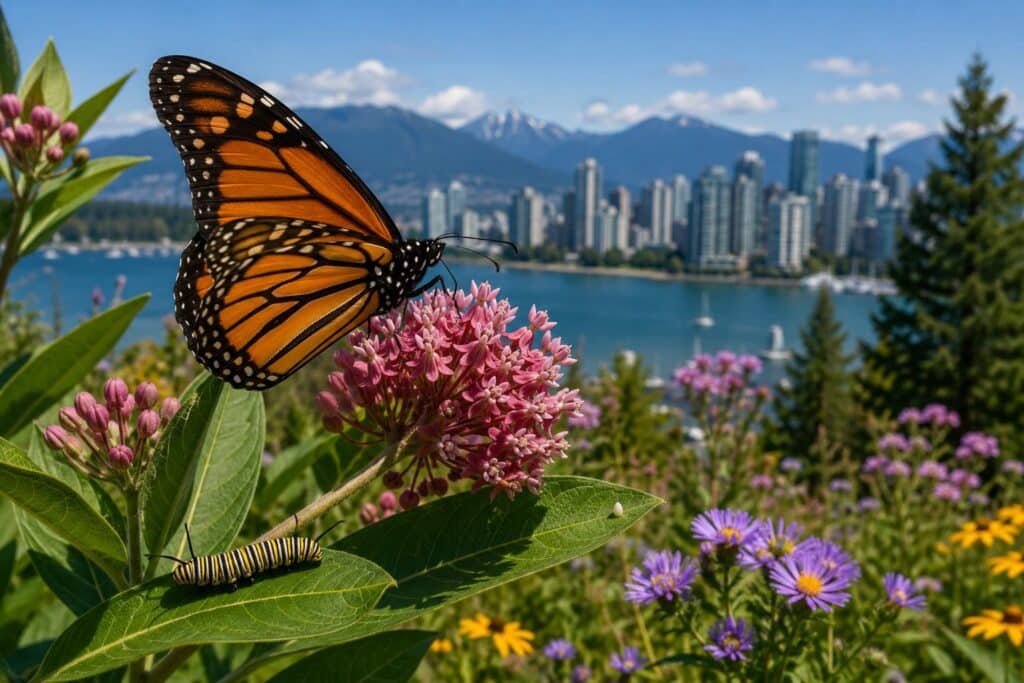
Want to spot endangered Monarch Butterflies in Vancouver? Discover the rare truth about BC’s missing milkweed and how to legally help them.
The arrival of Monarch Butterflies (Danaus plexippus) has always been Canada’s most beautiful sign that summer has finally hit the coast. Known for their vivid orange-and-black wings and an extraordinary migratory journey that spans thousands of kilometers, these iconic pollinators are facing a quiet crisis.
While millions of people in eastern Canada watch them flutter by, here on the West Coast, catching a glimpse of a Monarch is becoming as rare as finding a needle in a haystack.
But is it actually possible to spot them in Vancouver? The answer is a fascinating mix of weather anomalies, strict federal laws, and an urgent botanical mystery.
The Western Migration: Why Vancouver is a “Detour”
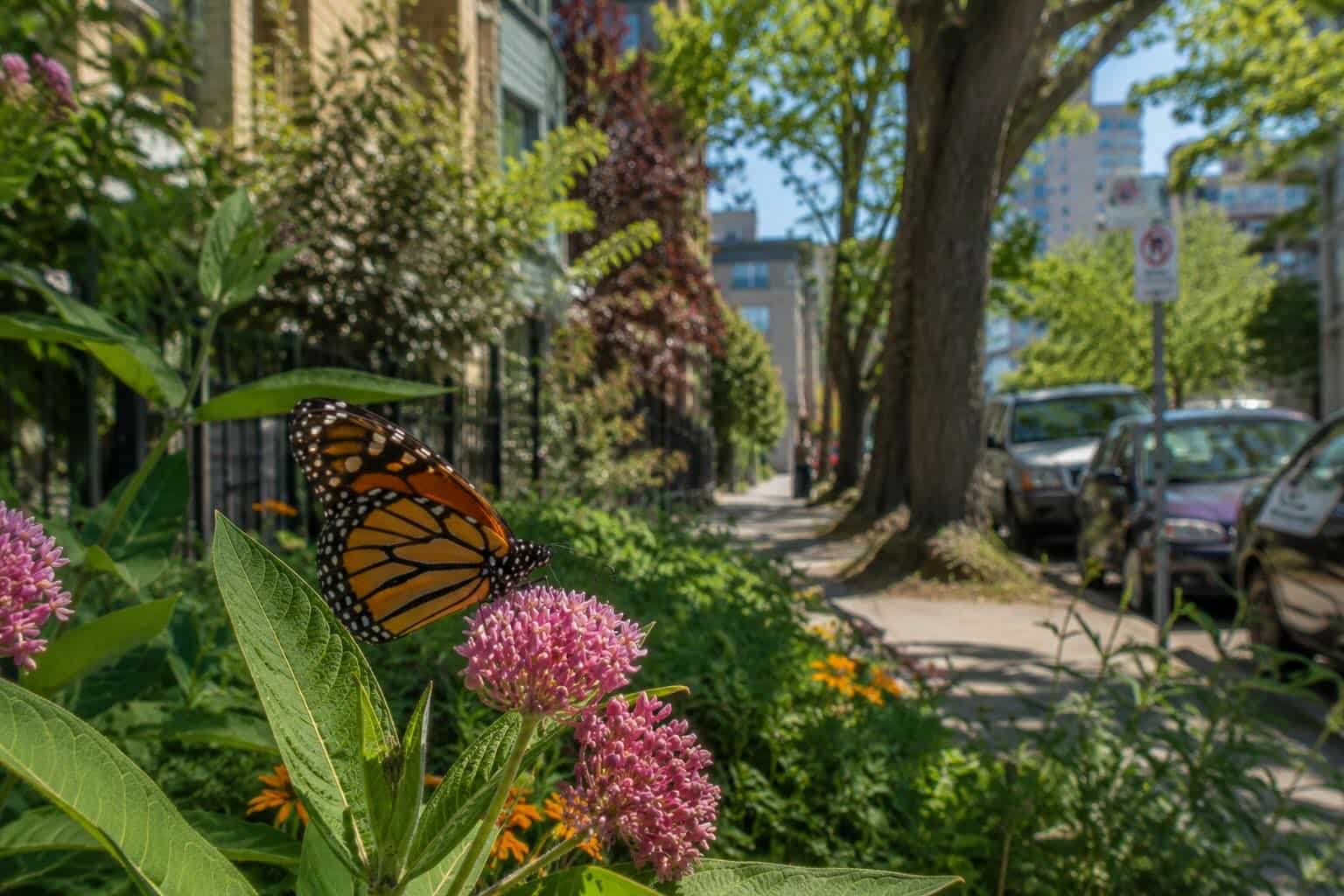 North American Monarch Butterflies are split into two distinct populations by the Rocky Mountains. While the massive eastern population travels from Mexico to Ontario, our Western Monarchs overwinter along the sunny coast of California. When spring hits, they begin moving inland and north toward southern British Columbia to breed.
However, Western Monarchs are rare breeders in BC, and their numbers fluctuate wildly from year to year. Historically, documents from the Canadian Wildlife Service show that Western Monarchs rely heavily on specific geographic corridors when they do cross into BC. During exceptionally warm and sunny Pacific Northwest summers, these high-flying navigators push northward along the Fraser River and scatter across the Okanagan Valley, searching for any isolated patches of milkweed they can find.
If they are blown further west toward the Vancouver coast, it is a true anomaly against the geographical odds. While searching the city’s parks and green spaces for these rare insects, you might also notice how Vancouver’s urban landscape is shifting during major events. Balancing the needs of local natural ecosystems with massive global tourism is a growing challenge for the city, a dilemma we deeply explored in our recent Vancouver World Cup Urban Critique.
3 Shocking Reasons Behind the Monarch’s Disappearance
If you feel like you haven’t seen a Monarch in Vancouver lately, you aren’t imagining things. Their populations have plummeted by an alarming 74% in the west. The situation has become so critical that the Government of Canada officially listed the Monarch Butterfly as an Endangered Species under the federal Species at Risk Act (SARA).
The reasons they are vanishing from southwestern BC include:
-
The Milkweed Wipeout: Monarch caterpillars are incredibly picky eaters—they only eat milkweed. Showy milkweed (Asclepias speciosa) is native to BC, but because it can make livestock sick, land developers and farmers have aggressively cleared it out. No milkweed means no caterpillars.
-
The Deadly Spray: The widespread use of herbicides and systemic insecticides along roadsides and agricultural lands has accidentally poisoned both the host plants and the nectar-rich wildflowers that adult butterflies need to fuel their migration.
-
The Great Legal Irony: For decades across Canada, milkweed was officially classified under various provincial Noxious Weed Acts. Because of this, municipal maintenance crews were legally incentivized—and often forced—to spray and eradicate it from roadsides and ditches. Vancouver is now caught in a bureaucratic paradox: trying to foster urban biodiversity while undoing a century of systemic botanical clearing.
3 Shocking Reasons Behind the Monarch’s Disappearance
If you feel like you haven’t seen a Monarch in Vancouver lately, you aren’t imagining things. Their populations have plummeted by an alarming 74% in the west. The situation has become so critical that the Government of Canada officially listed the Monarch Butterfly as an Endangered Species under the federal Species at Risk Act (SARA).
The reasons they are vanishing from southwestern BC include:
-
The Milkweed Wipeout: Monarch caterpillars are incredibly picky eaters—they only eat milkweed. Showy milkweed (Asclepias speciosa) is native to BC, but because it can make livestock sick, land developers and farmers have aggressively cleared it out. No milkweed means no caterpillars.
-
The Deadly Spray: The widespread use of herbicides and systemic insecticides along roadsides and agricultural lands has accidentally poisoned both the host plants and the nectar-rich wildflowers that adult butterflies need to fuel their migration.
-
The Great Legal Irony: For decades across Canada, milkweed was officially classified under various provincial Noxious Weed Acts. Because of this, municipal maintenance crews were legally incentivized—and often forced—to spray and eradicate it from roadsides and ditches. Vancouver is now caught in a bureaucratic paradox: trying to foster urban biodiversity while undoing a century of systemic botanical clearing.
The New Law: Hands Off the Butterflies!
With the new federal Endangered status comes serious legal protection. If you are exploring federal lands in BC (like National Wildlife Areas, First Nation reserves, or military bases), it is now strictly illegal to kill, harm, harass, or capture a Monarch at any stage of its life—including its eggs, caterpillars, and chrysalises.
Even popular citizen-science activities like “rearing” (raising caterpillars in net cages at home) or “tagging” wings for migration tracking now require an official federal SARA permit if done on federal land.
How to Turn Your Vancouver Backyard Into a Monarch Sanctuary
You don’t need to break the law to save this iconic insect. The absolute best way to attract and help a wandering Western Monarch is to plant native Showy Milkweed (Asclepias speciosa) in your garden.
By adding native milkweed and planting a colorful variety of local wildflowers that bloom at different times throughout the summer, you ensure that these long-distance travelers have a safe, chemical-free pitstop to refuel.
To learn more about Canada’s official recovery strategies, check out the Canada Species at Risk Public Registry.
The urgent need to protect these disappearing pollinators has also deeply resonated with the local arts community. For instance, Vancouver-based illustrator and designer Crystal Chan has created a stunning visual art tribute to the Monarch’s life cycle, capturing the fragile presence of these butterflies and their relationship with native milkweed. Supporting local voices who highlight British Columbia’s biodiversity is just another way to keep the conversation around conservation alive.
If you do spot a genuine Monarch, its striking black-and-white striped caterpillar, or its distinct cream-colored egg, don’t touch it! Instead, become a citizen scientist by taking a photo and logging your sighting on apps like Journey North or Canada’s Mission Monarch program to help researchers map and save this disappearing treasure.
Looking for more summer adventures in Vancouver? After exploring the city’s hidden nature, make sure to plan a scenic weekend getaway to the beautiful lavender farms Vancouver has to offer this season. If you are staying downtown near the stadium instead, don’t miss our local recommendations for the best food near BC Place or find the ultimate spots to celebrate and watch the games at the top World Cup watch parties in the city!

Hi, I’m the creator behind It’s Time for Vancouver. As a local resident, I spend my weekends capturing the magic of the Pacific Northwest, whether that’s mapping out historic day trips, tracking down regional wildlife, or finding the perfect urban escape. My goal is to give you honest, actionable guides so you can make the absolute most of every season in this beautiful province.





Pingback: 3 Must-Visit Lavender Farms Vancouver: The Ultimate Summer Road Trip
Pingback: Swallowtail Butterfly in Vancouver: 3 Reasons for the Sudden Summer Boom
Pingback: The Ultimate 2026 Guide to Bioluminescence Vancouver: See Glowing Waters
Pingback: Fireflies in Vancouver BC: The Surprising Truth (2026)
Pingback: Best Whale Watch Vancouver | It's Time for Vancouver Guide