Wondering why you are seeing the Swallowtail Butterfly in Vancouver is buzzing about? Discover 3 breathtaking reasons behind this summer’s incredible nature boom.
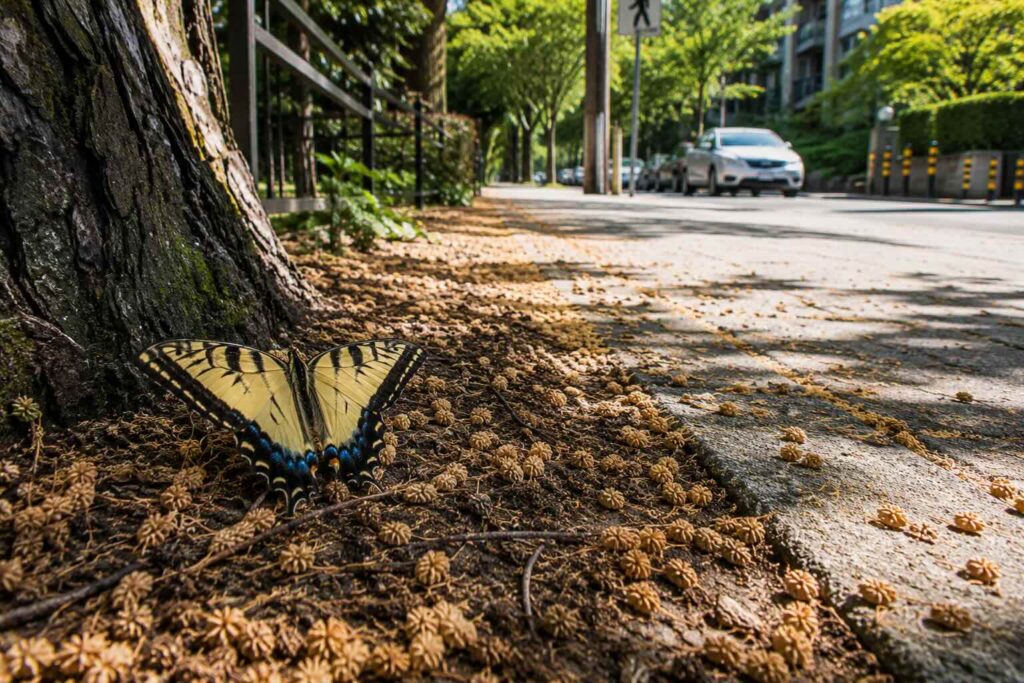
If you have taken a stroll through Stanley Park, Lighthouse Park, or even your own neighborhood backyard in Metro Vancouver recently, you have likely noticed something truly spectacular. The air seems to be filled with an unusually high number of large, vibrant insects, and everyone is asking about the sudden swallowtail butterfly vancouver boom. Look down at your feet, and you will also find the ground practically carpeted with tiny, lightweight Douglas fir male pollen cones.
So, what is causing this sudden, breathtaking surge in local wildlife and plant reproduction? It turns out that Vancouver’s recent weather patterns have created the perfect storm for a biological “boom” year. Here is the fascinating science behind what is happening in our local ecosystem right now.
The Swallowtail Surge: Why Are There So Many Butterflies?
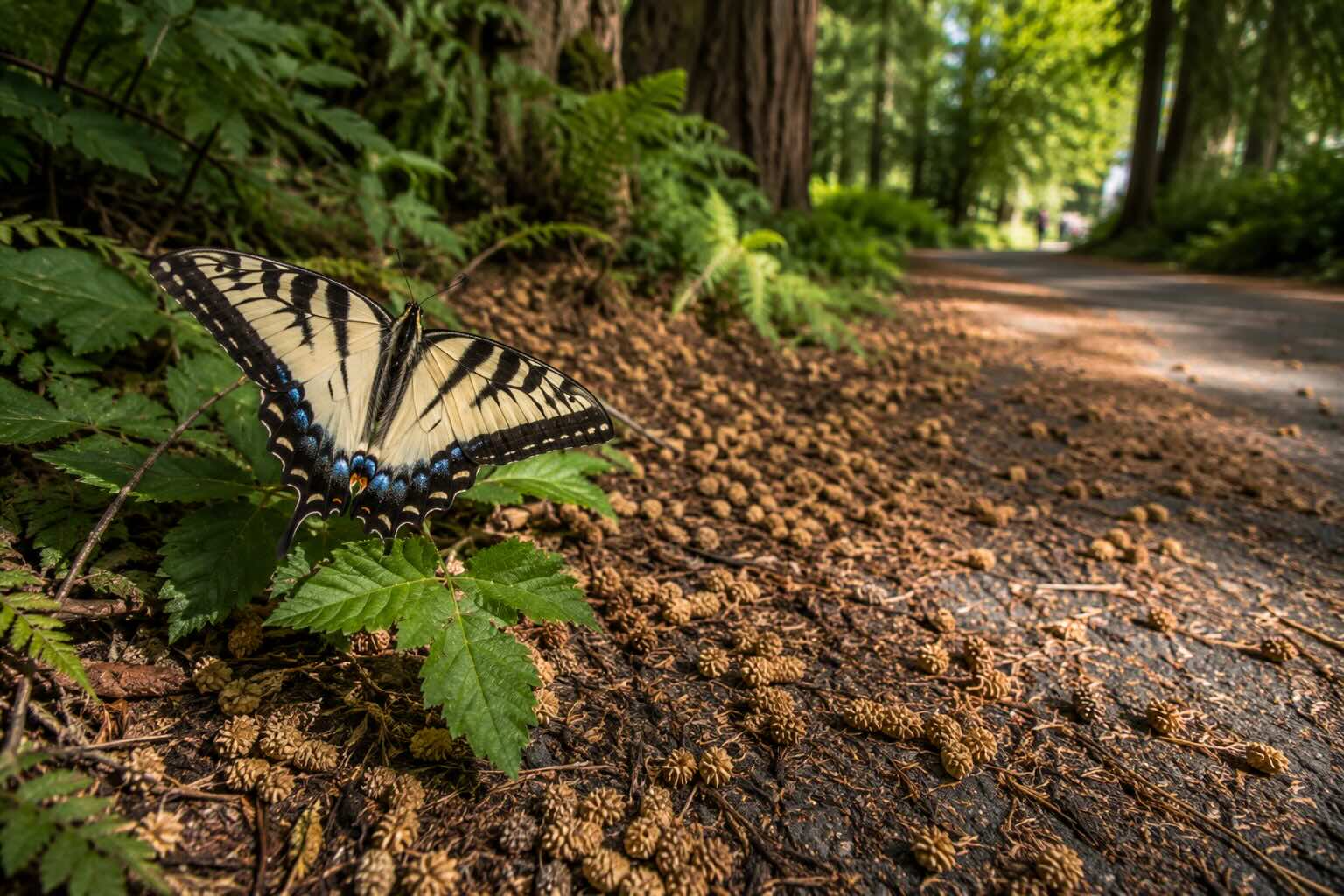
The Western Tiger Swallowtail (Papilio rutulus), with its striking yellow and black tiger-striped wings, is one of the most recognizable insects in British Columbia. While they are a staple of a classic Northwest summer, this year’s population has caught the attention of local nature enthusiasts and biologists alike. If you are hoping to spot a swallowtail butterfly in Vancouver’s parks are currently the absolute best places to witness them in massive numbers.
There are three main factors driving this summer’s incredible butterfly boom:
-
A Mild, Gentle Winter: Butterflies overwinter in British Columbia as pupae (chrysalises). The unusually mild winter we recently experienced protected these delicate pupae from extreme, killing frosts, allowing a significantly higher percentage of them to survive until spring.
-
Warm and Dry Spring Weather: Once the caterpillars and eggs emerged, Vancouver was hit with warm, beautifully dry spring conditions. Wet springs often introduce deadly fungal infections and dampness that destroy butterfly eggs and caterpillars. This year’s dry spell boosted their survival rates dramatically.
-
Natural Population Cycles: In biology, many insect populations operate on cyclical waves. Every few years, environmental alignments trigger a “mast” or “boom” year where populations explode naturally before leveling off.
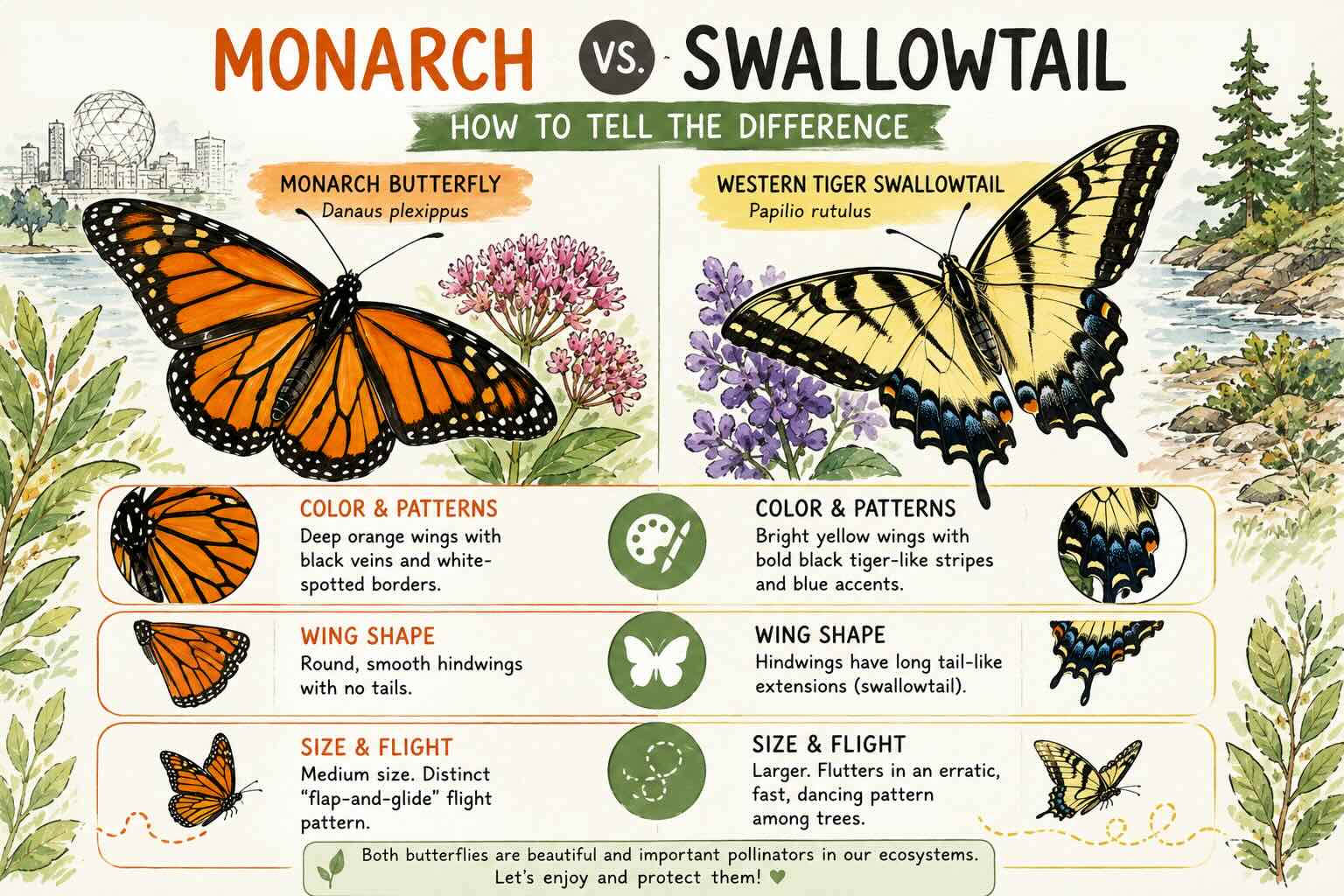
Monarch vs. Swallowtail: How to Tell the Difference
With so many large butterflies fluttering around Metro Vancouver this summer, it’s easy to get them confused—especially with the famous Monarch butterfly. However, telling them apart is quite simple once you know what to look for:
-
Color and Patterns: The Western Tiger Swallowtail features a bright, vibrant yellow background with thick black tiger-like stripes slashing across its wings. On the other hand, the Monarch butterfly is known for its deep, rich burnt-orange wings matrixed with heavy black veins and a white-spotted border.
-
Wing Shape: Look closely at the bottom of the wings. Swallowtails get their name from the long, elegant “tails” on their hindwings, resembling the forks of a swallow’s tail. Monarchs have clean, rounded hindwings with no tails at all.
-
Size and Flight: Swallowtails are typically larger and tend to flutter in a much more erratic, high-energy dancing pattern around treetops, while Monarchs have a distinct “flap-and-glide” majestic flight pattern.
If you think you spotted an orange explorer instead of a yellow one, make sure to read our dedicated guide on how to find Monarch Butterflies in Vancouver to check if they are visiting your neighborhood!
Look Down: The Mystery of the Douglas Fir Pollen Cones
The secondary phenomenon taking over the city is visual evidence of the plant kingdom reacting to similar environmental cues. People across the Lower Mainland are noticing massive quantities of the small, lightweight male pollen cones shed by Douglas fir trees.
Trees don’t just produce the same amount of cones every year; they synchronize their reproductive efforts in what ecologists call a “mast year.” Because cone buds are actually initiated during the previous summer, this year’s heavy carpet of cones is a direct reflection of last year’s conditions.
When trees experience environmental stressors—such as a hot, dry summer—their survival instinct kicks in, prompting them to allocate massive amounts of energy into passing on their genetics while they can. Alternatively, when conditions are exceptionally rich, healthy trees use their surplus resources to maximize reproduction. Whichever the case, local observations point to this being the heaviest cone drop Vancouver has seen in nearly a decade.
How to Spot and Appreciate Vancouver’s Wildlife This Season
Paying attention to these subtle environmental indicators connects us deeply to the pulse of the Pacific Northwest. To track real-time community observations and expert reports on insects across the province, you can consult the E-Fauna BC Electronic Atlas or review environmental trends via the BC Ministry of Environment Portal.
If you want to maximize your sightings, head out on warm, sunny afternoons when butterflies are most active, searching near nectar-rich flowers or water sources where they gather to drink nutrients from the mud.
Vancouver’s summer is full of natural wonders waiting to be discovered. After your morning of butterfly tracking, keep the nature adventure going by checking out our top spots for shore-based Whale Watching in Vancouver or plan a weekend getaway to the beautiful lavender farms Vancouver has to offer this season!

Hi, I’m the creator behind It’s Time for Vancouver. As a local resident, I spend my weekends capturing the magic of the Pacific Northwest, whether that’s mapping out historic day trips, tracking down regional wildlife, or finding the perfect urban escape. My goal is to give you honest, actionable guides so you can make the absolute most of every season in this beautiful province.